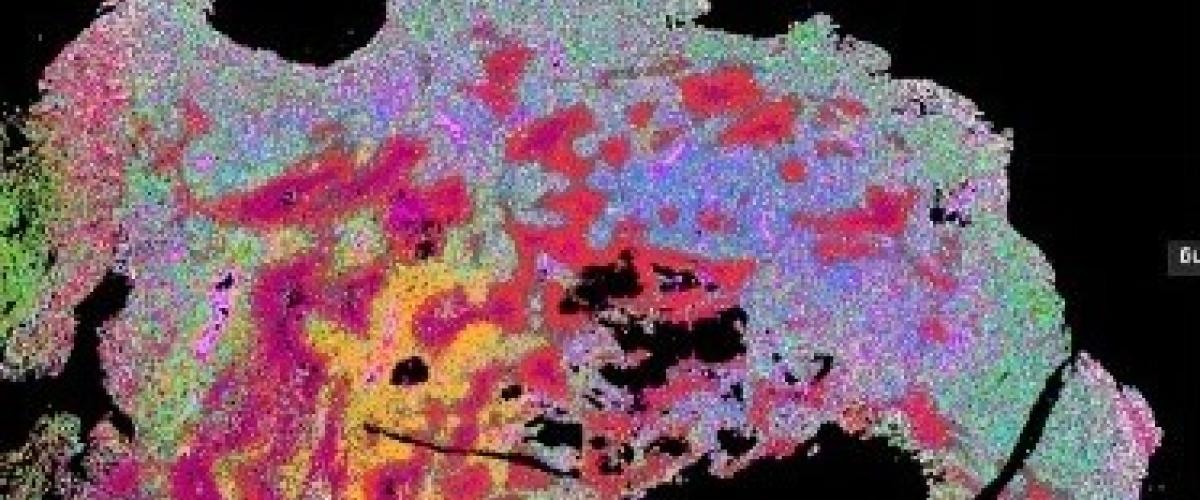
Established in 2023, the Brain Tumor Omics Program (BTOP) brings together investigators across Duke to advance brain tumor research through cutting-edge multi-omics technologies, patient-centered profiling, and collaborative science.
Led by the Preston Robert Tisch Brain Tumor Center, BTOP connects researchers with advanced technologies, data resources, bioinformatics expertise, and funding opportunities designed to accelerate discovery and address some of the most pressing challenges in neuro-oncology.
28 Faculty Members
Bringing together investigators across the BTOP research community.
8 Duke Departments
Creating an interdisciplinary approach to brain tumor research.
1,900 Patients
Represented in Duke's glioblastoma sequencing cohort.
Our Mission and Vision
Mission
BTOP leverages the power of omics by combining patient-centered profiling with novel high-dimensional technologies and analytics to address pressing challenges in neuro-oncology and advance patient care.
Vision
To be a global leader in developing and applying omics approaches to improve outcomes for brain tumor patients.
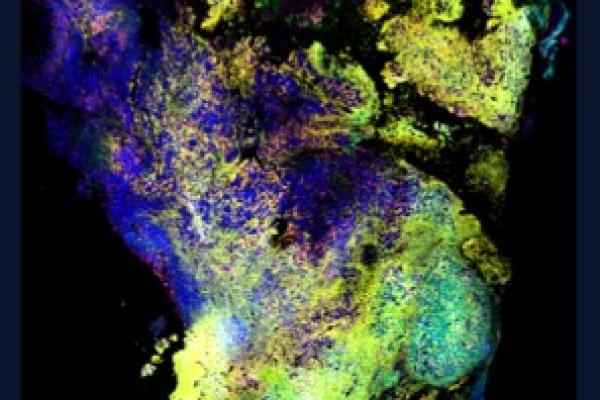
What Is Multi-Omics?
Brain tumors are extraordinarily complex, and understanding that complexity requires looking at them from multiple biological perspectives.
Multi-omics research combines different types of molecular information to create a more comprehensive view of a tumor. These approaches can examine gene expression, DNA alterations, proteins, metabolites, cellular behavior, and the spatial organization of tumor tissue.
By integrating these layers of information, researchers can better understand differences within and between brain tumors, investigate mechanisms of treatment response and resistance, and identify new questions and potential therapeutic targets.
Advanced Technologies and Research Resources
BTOP provides Duke investigators with coordinated access to advanced technologies and research resources that support increasingly detailed study of brain tumors at the molecular and cellular levels.
Through shared infrastructure, expertise, and strategic technology partnerships, investigators can explore research questions using approaches that may otherwise be difficult to access independently.
Single-Cell and Genomic Profiling
BTOP supports single-cell RNA sequencing, gene expression analysis, multiome profiling, T-cell and B-cell receptor sequencing, long-read sequencing, bulk RNA sequencing, and whole-exome sequencing.
Spatial Biology
Spatial transcriptomic, proteomic, and metabolomic technologies allow investigators to study where molecular features are located within tumor tissue and how cells interact within the tumor environment.
Cellular and Computational Analysis
BTOP supports longitudinal live-cell phenotyping as well as centralized bioinformatics expertise, methods development, and analytical support for complex research datasets.
Accelerating Research at Duke
BTOP connects investigators with advanced research technologies while fostering collaborations across disciplines and research groups.
Early-access relationships with technology leaders including 10x Genomics, Illumina, and Cellanome give Duke researchers opportunities to evaluate emerging platforms and generate novel preliminary data that can inform future studies and strengthen competitive research proposals.
Supporting New Research
BTOP invests directly in new ideas through a seed funding program designed to support pilot studies, interdisciplinary collaborations, and the application of emerging technologies.
These early investments help investigators test hypotheses, generate preliminary data, develop new research approaches, and build toward larger external funding opportunities.
$25,000
Pilot Awards
Supporting early-stage research and preliminary investigation.
$50,000
Collaborative Awards
Supporting research that brings investigators and disciplines together.
$100,000
Technology Awards
Supporting the application of advanced or emerging research technologies.
Building Toward Larger Discovery
Research supported through BTOP has contributed to competitive federal funding submissions across multiple mechanisms, including R01, R33, R35, P01, SPORE, and fellowship applications.
BTOP also provides centralized bioinformatics resources and research support that can help investigators move from early scientific questions toward larger, externally funded studies.

Training the Next Generation of Brain Tumor Researchers
BTOP invests in researchers at critical stages of their scientific careers, helping trainees develop independent research questions, generate preliminary data, and share their work with the broader scientific community.
Support includes 12 months of funding for PhD students pursuing independent hypothesis development and 50% FTE support for postdoctoral fellows over two years to help bridge the transition from training to career independence.
BTOP also provides travel awards for trainees presenting research at leading scientific meetings, including the Society for Neuro-Oncology, American Association for Cancer Research, Radiological Society of North America, and American Association of Immunologists.
9 travel awards were granted between 2023 and 2025.