
For nearly two decades, David Gallagher, MD, has dedicated his career to caring for patients and supporting the physicians and clinical teams at Duke University Health System. As a hospitalist and physician executive, he has spent much of his professional life working to improve the delivery of care, most recently serving as chief medical officer of Duke University Hospital. But in the summer of 2025, his relationship with the healthcare system changed when he received a glioblastoma diagnosis ..
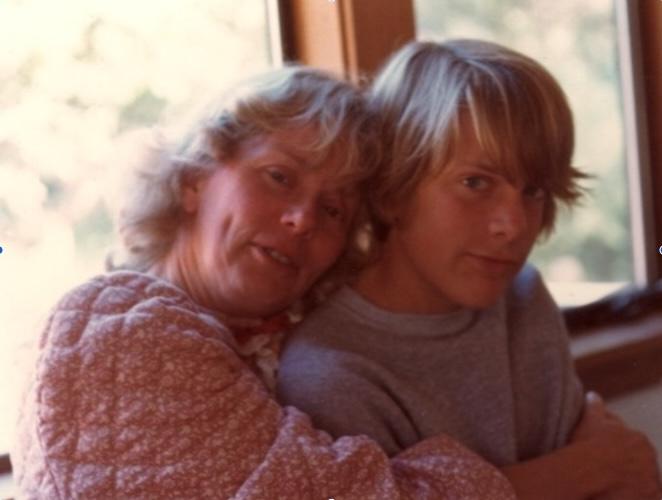
For Gallagher, the diagnosis carried a particularly personal significance. Nearly 40 years earlier, while he was attending medical school, his mother had been diagnosed with the same disease. Having witnessed her experience during an era when treatment options were considerably more limited, he now found himself confronting glioblastoma as both a physician familiar with its challenges and a patient navigating the advances that have transformed brain tumor care.
His experience has offered a perspective on the evolution of glioblastoma treatment, the challenges patients face beyond their diagnosis, and the importance of continuing to invest in research that can improve outcomes for future generations.
A Career Dedicated to Patient Care
Gallagher joined Duke in 2006 and spent much of the next 20 years leading hospital medicine programs across Duke University Hospital, Duke Regional Hospital, and Duke Raleigh Hospital. His work focused on supporting hospitalists -- physicians who specialize in caring for hospitalized patients -- while helping clinical teams navigate the demands of providing high quality care across a complex health system.
In 2023, he transitioned into the role of chief medical officer at Duke University Hospital, expanding his responsibilities to work closely with physician and advanced practice provider leadership throughout the institution. The position placed him at the intersection of clinical care, hospital operations, and organizational leadership, where he helped clinicians and departments achieve their goals while supporting the broader needs of the hospital.
Although his career had given him an extensive understanding of medicine and the healthcare system, nothing could fully prepare him for the experience of becoming a patient himself.
During the summer of 2025, Gallagher began experiencing headaches and changes in his gait, symptoms he initially attempted to manage on his own. As the symptoms persisted, his wife, Jennifer, encouraged him to seek medical attention at the Duke University
Hospital Emergency Department. Imaging revealed a seven-centimeter mass on the right side of his brain, approximately the size of a closed fist, with significant pressure on surrounding structures.
An MRI confirmed the severity of the situation, revealing that the mass was causing substantial displacement within the brain and placing him at risk of herniation. He was immediately started on steroids to reduce swelling, and neurosurgeon Allan Friedman, MD, met with him in the emergency department to discuss the findings and plan for surgery the following day.
The operation went well, and Gallagher recovered quickly enough to return home just one day after surgery. Within the following days, he met with Henry Friedman, MD, and the team at the Preston Robert Tisch Brain Tumor Center, along with radiation oncologist John Kirkpatrick, MD, PhD, to discuss the next phase of treatment. His care plan included radiation therapy and temozolomide, the standard chemotherapy commonly used to treat glioblastoma, as he began adjusting to the realities of his diagnosis.
Witnessing Four Decades of Progress in Glioblastoma Treatment
For Gallagher, receiving a glioblastoma diagnosis brought back memories of his mother's experience with the disease in the 1980s, when he was still in medical school and helping his parents navigate her care. At the time, the tools available to physicians were considerably different from those used today, and many of the advances now considered essential to brain tumor diagnosis and treatment had yet to emerge.
MRI technology was not routinely available, CT imaging was more limited, and physicians had few options beyond surgery and radiation therapy. His mother underwent an operation followed by radiation, but when her condition began to decline in the late 1980s due to a suspected recurrence, there were no additional effective treatments available to her. As her neurological and cognitive functioning deteriorated, she transitioned to hospice care and ultimately died approximately a year and a half after her diagnosis.
Having witnessed the disease at a time when treatment options were so limited, Gallagher recognizes the significance of the scientific progress that has taken place over the decades since. Advances in imaging, surgical techniques, molecular biology, and genetic sequencing have fundamentally changed how physicians understand glioblastoma and approach treatment, creating opportunities for more individualized care and new avenues of research.
Following his own diagnosis, Gallagher became interested in exploring emerging treatment approaches alongside his care at Duke, including a personalized cancer vaccine developed by CeGaT in Germany. The investigational approach uses molecular information
from a patient's tumor to identify specific proteins and antigens that may serve as targets for an immune response. Although the effectiveness of personalized cancer vaccines in glioblastoma remains under investigation, the underlying science represents a significant departure from the limited treatment options available when his mother was diagnosed.
For Gallagher, experiencing these two eras of glioblastoma care within his own family has reinforced both how far the field has advanced and how much work remains to be done.
Navigating Treatment, Recurrence, and a Changing Routine
Following his initial surgery and treatment, Gallagher was eager to return to work, gradually resuming his responsibilities until he was back to a full time schedule by December 2025. Returning to the hospital provided a sense of familiarity and continuity during a period when much of his life had changed, allowing him to remain connected to the work and colleagues that had been central to his career.
In the spring of 2026, however, he began noticing subtle changes in his memory and cognitive functioning, along with occasional tingling sensations involving his scalp and arm. Although the symptoms were not particularly severe, they were noticeable enough that he discussed them with his wife and his medical team. An MRI revealed an area of concern within the cavity where his original tumor had been removed, and a subsequent biopsy confirmed that the glioblastoma had recurred.
The recurrence prompted adjustments to his treatment plan, including immunotherapy and a change in chemotherapy. By that point, he had also begun receiving his personalized vaccine by CeGaT, a treatment he continues to pursue through visits to Germany approximately every four to six weeks.
Following the recurrence, tissue from his second biopsy was sent for additional analysis, revealing differences in the proteins and antigens present compared with his original tumor. Those findings allowed the team developing his vaccine to modify its composition to reflect the molecular characteristics identified in the recurrent disease.
While these approaches remain areas of active investigation, Gallagher's experience demonstrates the increasing role of molecular analysis in understanding how brain tumors evolve and how researchers are working to develop more individualized treatment strategies.
At the same time, the recurrence brought additional changes to his daily life and professional responsibilities, requiring him to adjust to a routine increasingly centered on treatment, recovery, and his health.
Understanding the Patient Experience from a Different Perspective
Throughout his career, Gallagher has worked alongside physicians and clinical teams to improve the patient experience, but his own diagnosis has given him a different understanding of what it means to navigate a serious illness. Beyond the medical decisions and treatment appointments, he has become more aware of the ongoing physical, emotional, and logistical demands that patients manage throughout their care.
The transition away from his responsibilities as chief medical officer has been particularly challenging. After years of working in a demanding leadership position, Gallagher found himself adjusting to a considerably different pace of life, one increasingly centered on his health and treatment.
A physician friend described the experience as "decompression trauma," a phrase that resonated with Gallagher as he considered the abrupt change from a high intensity professional environment to life as a patient. He compares the experience to going from 60 miles per hour to a complete stop, a change that has brought unexpected feelings of grief as he adjusts to a new routine.
His wife has also witnessed the challenges of that transition. She describes the adjustment from hospital leadership to becoming a full-time patient as difficult, particularly after a career dedicated to caring for others.
For Gallagher, the experience has reinforced his appreciation for the patients he spent decades serving. He now has a greater understanding of the challenges patients face throughout treatment and the importance of compassionate, coordinated care.
Jennifer, a physician of clinical nutrition and registered dietitian, has been closely involved throughout his treatment, helping him navigate changes in his daily routine while placing particular emphasis on nutrition and overall well-being. Together, they have adjusted to the challenges of his diagnosis and the transition from hospital leadership to a life in which medical care occupies a much greater role.
Gallagher has also made a deliberate effort to maintain a sense of control over the aspects of his life that remain within his influence. Meditation, mindfulness, guided imagery, physical activity, and listening to classical music have become important parts of his routine, providing opportunities to focus on his physical and emotional well-being while navigating the uncertainty associated with glioblastoma.
He has developed a personal mantra centered on three words: "positivity, optimism, and love." When he encounters particularly difficult moments, he returns to those principles as
a way to maintain perspective and focus on the relationships and experiences that remain important to him.
Through his experience as a patient, Gallagher has also gained an even greater appreciation for the care and support provided by the clinicians and staff at Duke. Having spent much of his career supporting healthcare professionals, he now sees firsthand how their compassion, communication, and attention to individual patient needs can influence the experience of someone undergoing treatment.
A Continued Commitment to Brain Tumor Research and Awareness
Shortly after waking from his initial surgery, Gallagher remembers reflecting on the circumstances that had brought him to that moment and the experience his family had endured decades earlier.
"You've lost your mom to this horrible disease, now you've got it, what are you going do about it?" he recalls thinking.
That question has remained with him throughout his treatment and has motivated him to find ways to contribute to the brain tumor community. Although his diagnosis has changed the nature of his professional involvement at Duke, he remains committed to contributing to the work of the Preston Robert Tisch Brain Tumor Center through advocacy, philanthropy, and opportunities to raise awareness about the disease.
His perspective is shaped by a combination of experiences that few individuals share. As a physician, he understands the complexity of treating glioblastoma and the challenges associated with developing more effective therapies. As a hospital executive, he recognizes the importance of coordinated, multidisciplinary care. As someone who lost his mother to the disease and is now undergoing treatment himself, he understands the impact of glioblastoma on patients and their families across generations.
For Gallagher, the differences between his mother's treatment in the 1980s and the care available today serve as a reminder of the importance of sustained investment in brain tumor research. While glioblastoma remains one of the most challenging cancers to treat, continued advances in molecular science, immunotherapy, and clinical research are expanding the possibilities for understanding the disease and developing new treatment approaches.
As he continues his own treatment, Gallagher remains focused on his family, his health, and finding ways to contribute to the mission that has defined much of his professional life. His experience offers a perspective on the progress made in glioblastoma care over
nearly four decades, while reinforcing the need for continued research to improve outcomes for patients and families facing this diagnosis.