
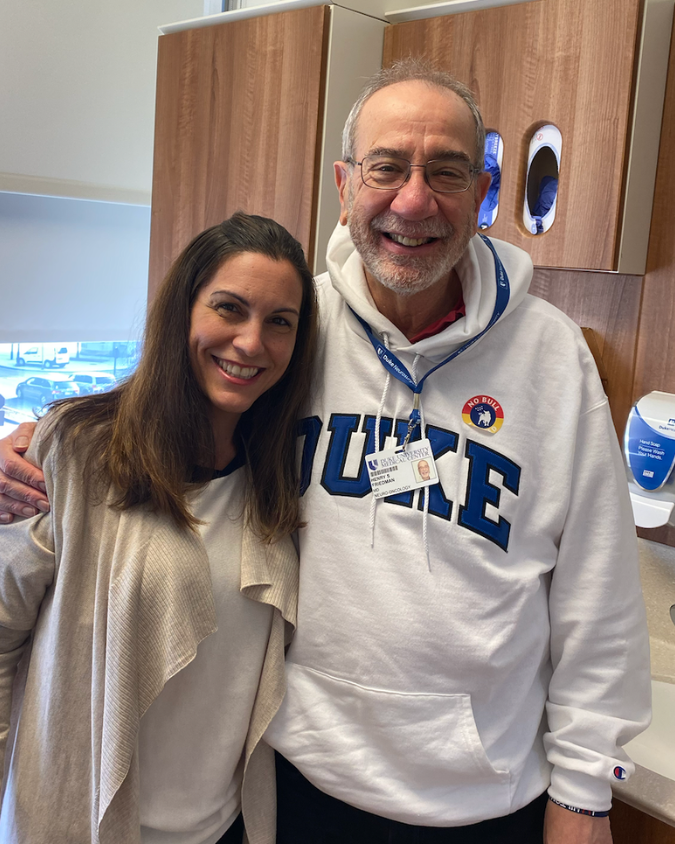
Before her diagnosis, Natasha Tomlinson was navigating a challenging period in her personal life. As she and her husband worked through difficult conversations about their future, Natasha began noticing unusual neurological symptoms. During emotionally charged moments, she would suddenly hear music playing in her head. The sensation was vivid and persistent, yet there was no external source. She could not explain what was happening, but she knew something was not right.
Years earlier, Natasha had been involved in a serious car accident and had undergone MRI imaging at that time. She remembered those scans and realized they could serve as a useful point of comparison as her symptoms continued. Growing more concerned, she told her mother she felt something was wrong. Even as life began to stabilize at home, the episodes persisted. At times, the music would begin while she was doing routine activities, such as getting dressed. Trusting her instincts, she decided to seek answers.
Natasha brought her previous MRI images to a neurologist and strongly advocated for additional evaluation. Despite being told by some that her symptoms could be related to stress, she remained persistent. A new MRI was performed, and doctors identified a mass in her brain.
She underwent surgery at the University of Miami. On her birthday, Natasha was admitted for the procedure. After surgery, she woke up alert and feeling like herself, relieved to have come through the operation well. Pathology results confirmed an anaplastic astrocytoma, a grade three brain tumor.
Through a family connection, Natasha was referred to Duke for further treatment and came under the care of Henry Friedman, MD. She completed eight weeks of chemotherapy and radiation. Molecular testing of her tumor revealed MGMT methylation and an IDH1 mutation, findings that helped inform her care plan.
Throughout her treatment and follow up care, Natasha formed strong connections with the Duke team. She speaks with particular appreciation for research nurse Rosemary Ketring and the many staff members who supported her. “Everybody I have seen, spoken with, called, or emailed, I just love the entire staff,” she shared. “Duke is where people take control.”
Today, Natasha is approaching her eight-year milestone since treatment. Most days, she feels well and lives without fear. “Ninety-five percent of the time, I feel good and I feel strong,” she said. “There is always a small part of you that feels nervous around MRI time, but when the scans come back clear, life moves forward again.”
Natasha is the proud mother of three children, a daughter in her twenties and two young sons. She remains deeply grateful for her care and for the life she is able to live today.
“When you are at Duke, you score,” Natasha said.