
Researchers in the lab of Matthew Waitkus, PhD, at the Preston Robert Tisch Brain Tumor Center have identified a promising new target for treating certain brain tumors, including IDH-mutant astrocytomas.
One important feature of cancer is that tumor cells can keep dividing forever. Normally, healthy cells stop dividing after a certain number of cycles. But cancer cells find ways to avoid this limit and continue growing.
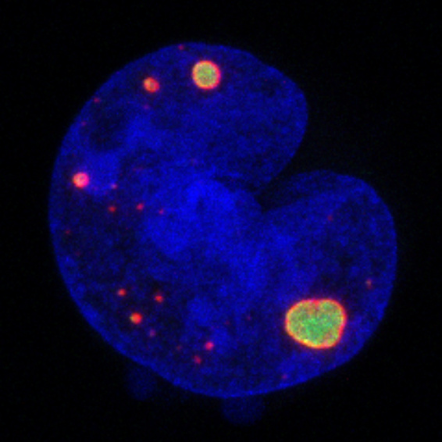
Some brain tumors do this by using a special process called alternative lengthening of telomeres, or ALT.
Telomeres are protective caps at the ends of chromosomes, like the plastic tips of shoelaces that keep the laces from fraying. Over time, telomeres normally get shorter. But cancer cells that use ALT can rebuild their telomeres, allowing them to keep growing and dividing.
Because ALT helps tumor cells survive, scientists believe it could be an important target for new treatments.
In this new study, the Waitkus lab discovered that glioma cells using ALT rely heavily on a DNA repair protein called SMARCAL1. This protein helps cells fix damage in their DNA.
When researchers disrupted SMARCAL1, the ALT-positive tumor cells were no longer able to repair their DNA properly and died.
Importantly, glioma cells that do not use ALT were largely unaffected by the loss of SMARCAL1. This finding suggests that therapies targeting SMARCAL1 may be able to specifically affect tumors that rely on the ALT pathway, while having less impact on tumors that use other mechanisms to grow.
This discovery reveals a new weakness in ALT-positive gliomas and may help guide the development of future targeted therapies for patients with brain tumors.
The research was published in the journal Neuro-Oncology.